Q&A with Fearless Refugee, Amina Selimović
And Fearless founder, Rialda Zukić
I interviewed Amina Selimović last year. We bonded over our shared refugee experiences. Both of our families were forced to leave our native country, Bosnia, in the early 1990s when the war started. Like so many other refugee kids, Amina and I both became our parents’ go-to translators when we first moved to the U.S. Amina tells me about some uncomfortable and even painful situations translating for her dad at a hospital when she was just 10 years old.
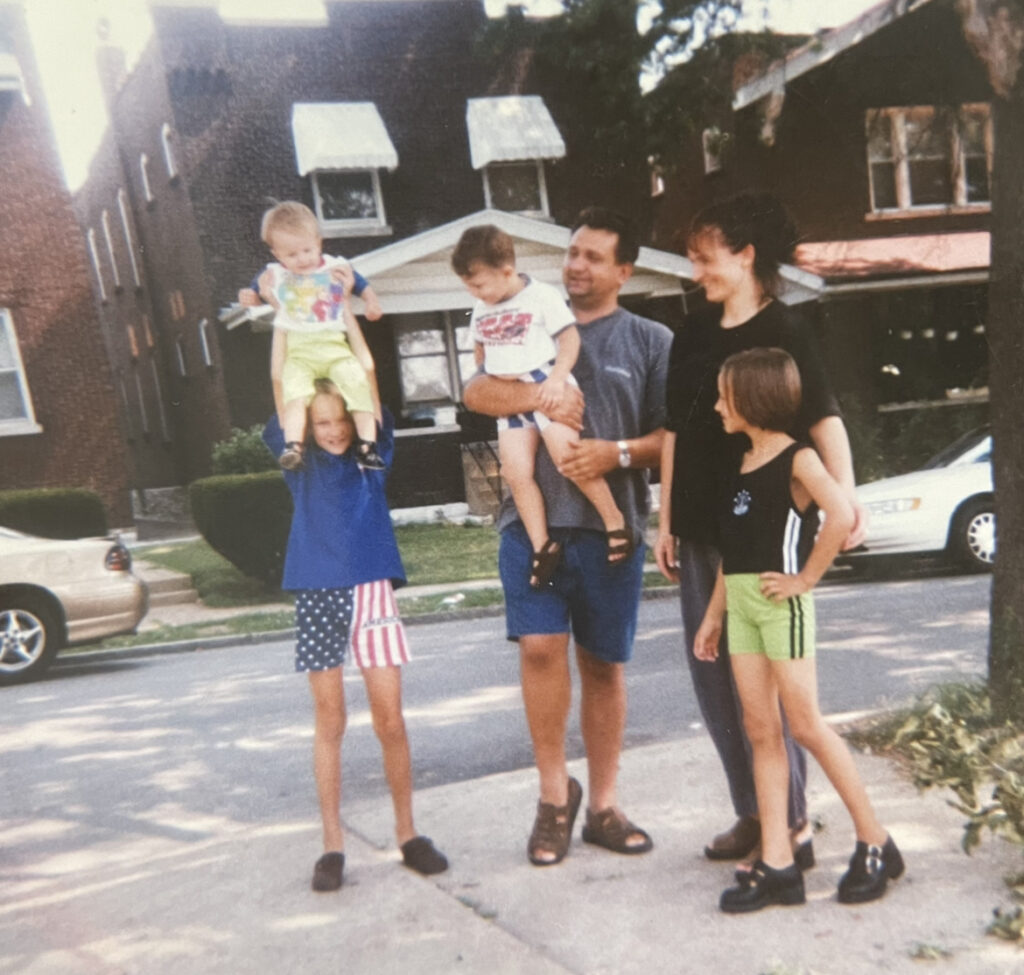
Amina moved to St. Louis, Missouri, in 1999, with her parents and two younger sisters. She’s the oldest of three girls — another thing we shared in common. Those early days in St. Louis left a lasting impression on her, I could tell. During our conversation, I was struck by Amina’s poise, her confidence and her warmth. It was reminiscent of talking to my own sister, or someone I’ve known for a while. I guess having shared experiences does that. It creates this unspoken bond. Amina is pretty badass. She leads a team at a St. Louis hospital. She’s a mom to two boys and a wife – and just an overall good human. Here are some excerpts from our conversation:
This conversation has been shortened for length and edited for clarity.
I REMEMBER CRYING PROBABLY FOR THREE OR FOUR MONTHS, LIKE, ‘WHY DID YOU BRING ME HERE? THIS IS TERRIBLE. I JUST WANT TO GO HOME.’
COMING TO AMERICA
RIALDA: What was your journey like? What do you remember from that experience of moving from place to place?
AMINA: I started school in Sarajevo [Bosnia]. I loved it. But I remember my mom pushing my dad to come to the U.S. and my dad not wanting to leave because he’s a huge patriot and he refused to leave [even] during the war… he was like, ‘why would I leave now?’
I remember being so excited because you think America — you think of New York, California. And I remember we did fly into New York and seeing the ocean, the Statue of Liberty, and it felt like that’s where we were going.
Then we came to St. Louis and when we first came, we didn’t really live in the best area. It was like a terrible part of St. Louis where it wasn’t safe. And I remember crying probably for three or four months, like, ‘why did you bring me here? This is terrible. I just want to go home.’
It didn’t look like the movies. It was not a good area. But my parents knew, this is all temporary. Like we’re going to get to a better place.
RIALDA: When you first moved to America, what was that like?
AMINA: I remember my first few months here where I didn’t speak a word of English and I would go to school and I was in fifth grade and kids are mean.
I’ll never forget, I was wearing shoes that my mom bought at Goodwill and they had a $2.99 on the bottom of the sole. And I was sitting in class and didn’t realize my foot was up. And everyone was like, ‘Oh my God, she goes to Goodwill, her shoes were $2.99.’ That’s heartbreaking, right?
everyone was like, ‘Oh my God, she goes to Goodwill, her shoes were $2.99.’ That’s heartbreaking, right?
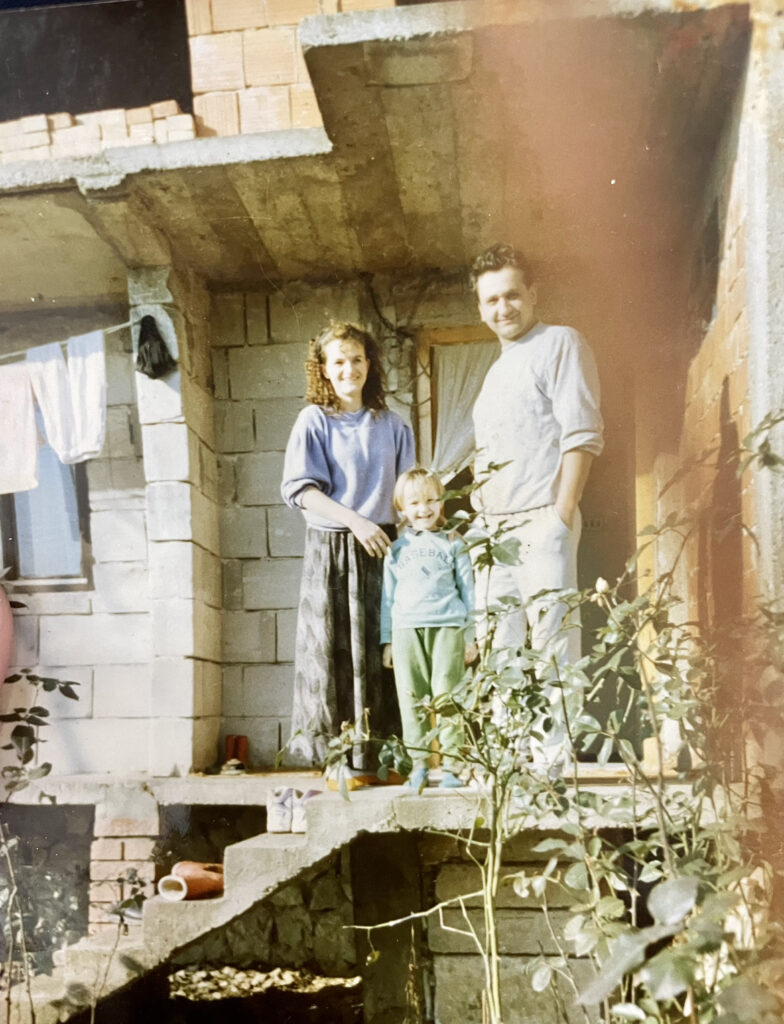
RIALDA: Was there anything else that sticks out to you? All I can remember is translating. Going to all these doctor’s appointments. Looking back on it now, what do you think about that? How do you feel about it?
AMINA: My dad was shot and injured in the war and he needed surgery our first month here. And I barely spoke English, but I went with him to the hospital as a translator. I remember just like breaking down and sobbing as I’m trying to translate. And that made it so much harder for my dad. It made it harder for myself. Like, that should not have ever happened.
I remember visiting him at the hospital and thinking, this doesn’t even look like a hospital. This looks like a mall. There was a fountain and people were smiling. And even though my dad was about to undergo this huge thing, they helped him. And so I think that maybe once I remember [thinking] I want to work at a place like this because I know that in the end I could also help people and give back while making a good career.
RIALDA: Did they offer you guys any translation services when you moved to St. Louis? Did you have people to rely on?
AMINA: I think the city was just trying to figure out how to deal with this influx of Bosnian refugees. So I don’t know that they had the resources and this was also 1999. So it’s not like we had Google or the Internet even at that point.
I was the only way that the doctor could communicate with my dad. And so that’s kind of the situation that we were in.
BEING BOSNIAN, BEING A GIRL
RIALDA: Do you have any siblings?
AMINA: I’m the oldest of three girls.
And there’s this thing in our culture that’s against girls sometimes. I’m sure you feel it, too. It’s like, ‘Yeah, girls can’t do everything the boys can. Or like ‘you’re a girl, so you have to get married.’
It’s like, ‘Yeah, girls can’t do everything the boys can. Or like ‘you’re a girl, so you have to get married.’
But my parents were never like that… I think it’s because we have three girls. My dad was so empowering to women, you can do anything.
… That experience with my dad whenever I was translating, pushed me into healthcare. And I think probably all of us, because I saw that they actually helped my dad when he needed it and everybody was so nice, which is not always the experience they get. I think in Bosnia, especially during the war and after the war.
HARD WORK IS INSTILLED IN US.
AMINA: When my dad got his surgery, he couldn’t work for a year. My mom was the only one working and she was making like $6.50 an hour. I don’t know how you support a family of five on that, but she did somehow.
We eventually moved into the county, into a better location. And now being here for 20 years. This is home.
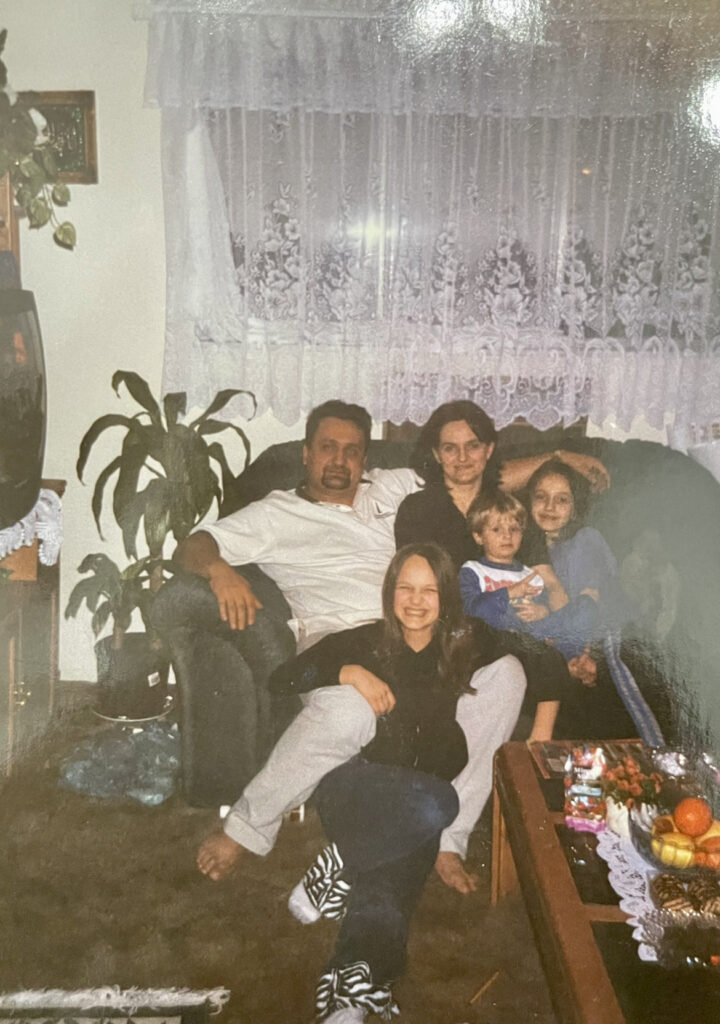
RIALDA: Hard work is instilled in us through our refugee experiences. There’s this fearlessness that comes with it. When it comes to taking risks, what do I have to lose? We almost lost everything at one point, and that’s how I came up with the name because I thought, ‘How many times did I nearly die as a kid?’
AMINA: At every job I’ve worked when it comes to people complaining about something ridiculous. I’ve spent my entire childhood almost dying. The things that you’re telling me are not that important and everything we can figure out. I think you do have the opportunity to keep those good things, but also take the good things of being in American culture. It’s also amazed me how much our minds have opened being here.
RIALDA: You speak a lot about family, like how your mom was working alone for a while, and then everyone kind of steps in – that’s a thread that I’m seeing with all of the refugee stories – even people from Syria or Afghanistan or people from Bosnia … family is at the center of it all. No matter what’s happening. It’s about sticking together. Can you speak to that a little bit?
AMINA: I’ve been trying to figure this out – what has helped me become successful… And sometimes I wonder, ‘how are we okay?’ Because it would be very easy to not be okay.
I always take it back to the fact that I had love and my parents always supported us. They loved us no matter what was going on. There was no giving up. It was like, ‘This is what we’re going through and we’re going to make it.’
No matter what happened at school, I didn’t really care, because I came home and it was a good household. It still felt together, we were always encouraged. My dad was always like, ‘You can do anything’ . You will do anything, whatever your heart desires. You can do this.
If you don’t have that and you go through the struggles that we’ve been through, there’s no way you’re going to make it. So I think that has literally been the glue that has helped bring us to where we are.